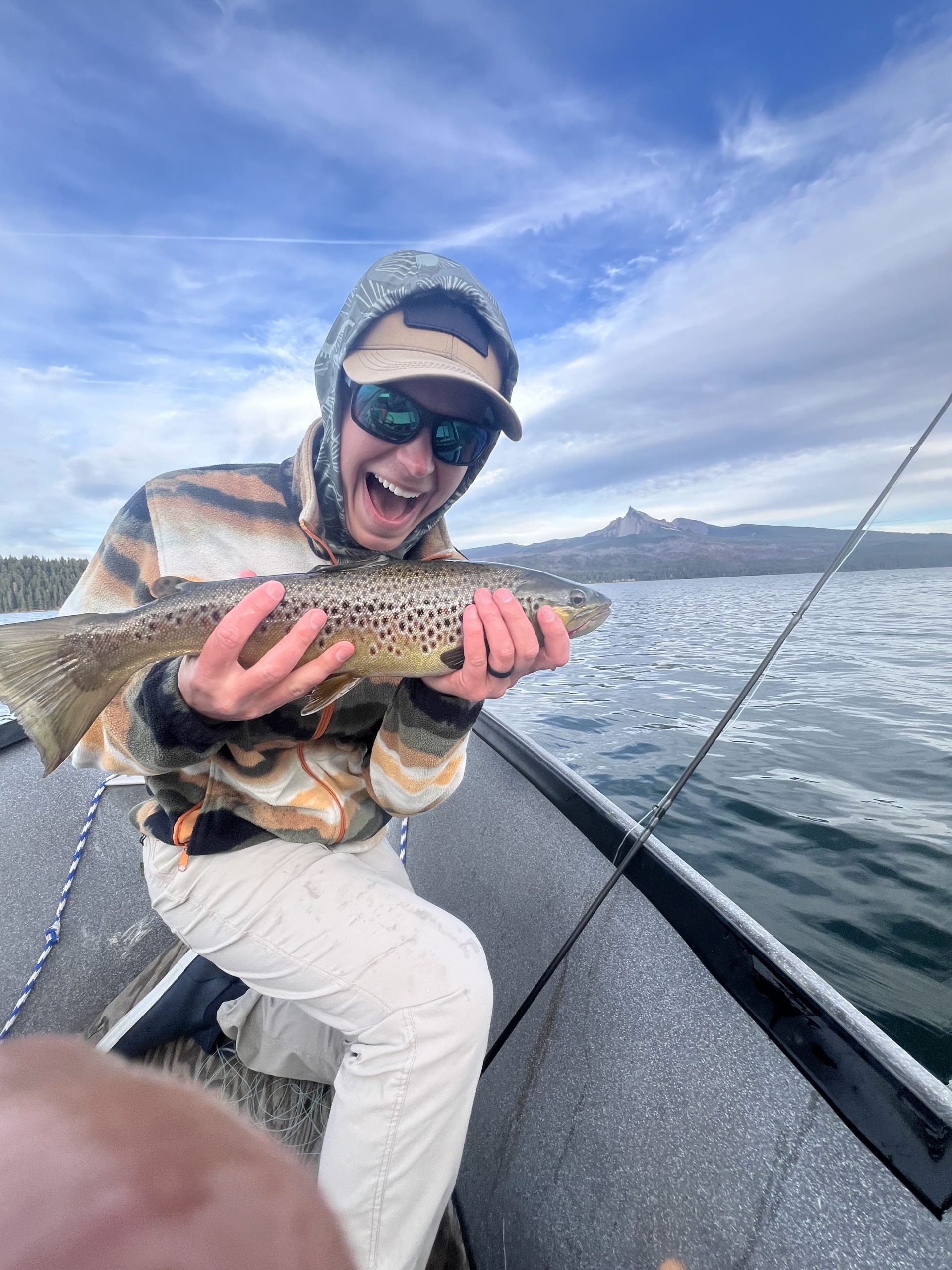
This is my fourth year writing a trip report for Diamond Lake. Since I started fishing this lake it has shown me time and time again that it is the best lake in Oregon for consistent opportunities at large trout. This year I focused on fly fishing the saltwater and warm water in the state. I think I made it out for trout only three times and all of them were on lakes. I do have an excuse, I did get married in June to my beautiful wife, Clara, and we did spend a lot of the summer traveling between a honeymoon and road trip from her home state of Minnesota towing a boat. So we have been busy. We also ended up buying a house and fixing it up somewhat and adding a fly tying room for myself. More of that and the boat to come. But enough about that, you want to know how my Diamond Lake trip this year went.
Normally I try and fish Diamond a few times each year. Since moving to Salem it makes it a three and half hour drive. I think next year I’ll schedule some overnight trips just to make it more worth my time especially with my own boat. I was able to get out and fish it this month so this report is fresh. It was just a day trip but it fished excellently for us!
I went down to Diamond Lake with two friends that had never fished there before. I guess one had but it was on a paddle board being blown all around the lake. So for all intents and purposes two people who have never fished there before. We got to the lake around 8am and were on the water by 8:30. We each had rods rigged with intermediate lines and another with an indicator set up to start the day. We headed to the Northwest corner and set up the drogue. I have my drogue modified with pocket on the top with a piece of 3/4″ pex and pipe insulator in the pocket and a couple grommets holding zinc plated shackles so that it deploys correctly every time. I say every time but the wind needs to be blowing enough and consistently for the dorogue to open and stay open without twisting or collapsing . That was a problem until the last quarter of the day. The wind was blowing from the East to start then from the South and then when the day ended we got some consistent wind from the North. There were times it was white capping then it would quickly shift to no wind then to a different direction. The drogue was developed in England where the wind is way less squirrelly. They have no mountains and shorter trees so as the air passes over the ground then the water there are fewer obstacles that can cause the wind to swirl or shift. So take that into account if you get a dogue and are frustrated with it.
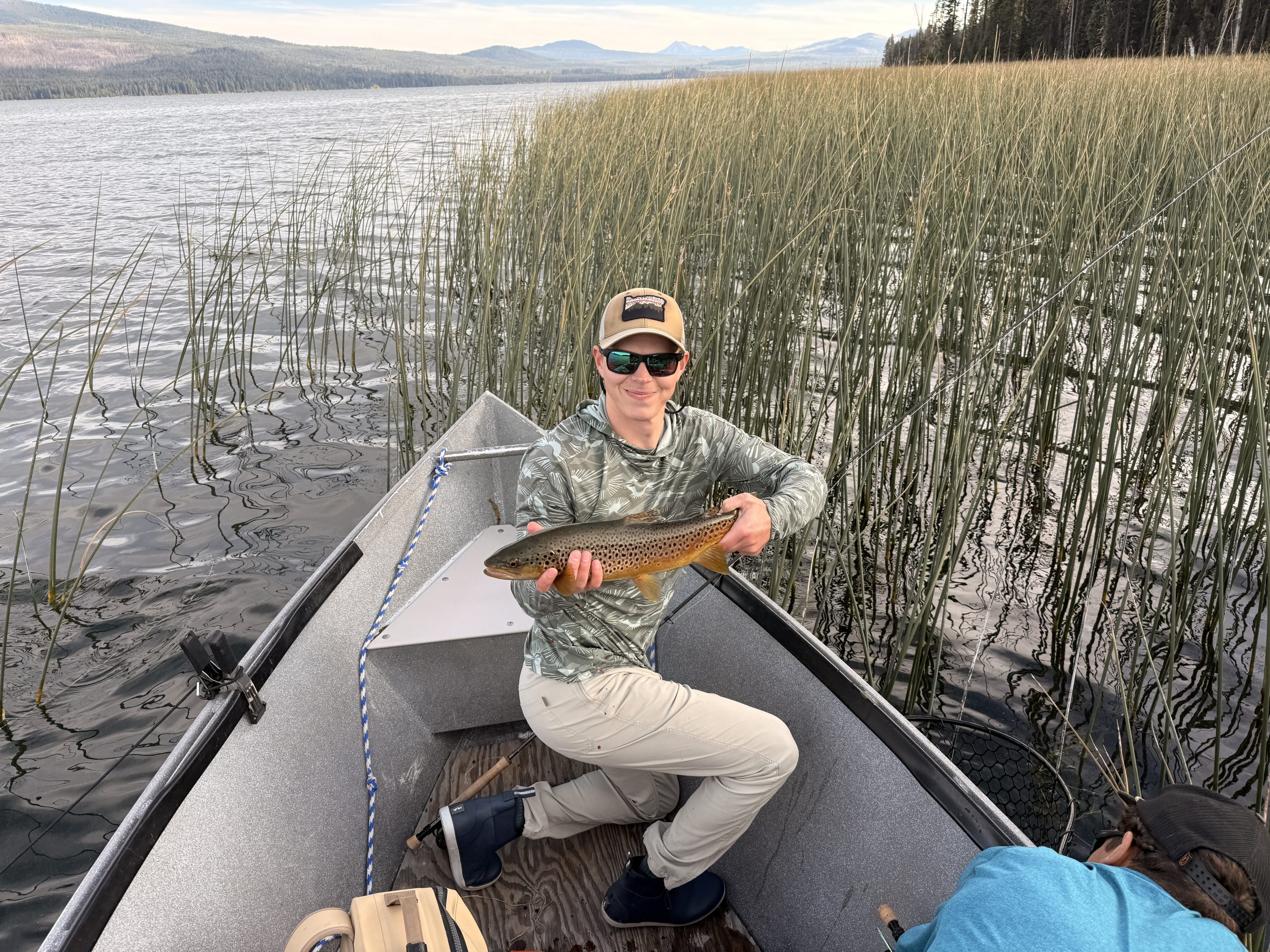
Cooper and Davis (the two friends) started with an indicator set up fishing about 5′-7′ deep. We started the drift in 15′ of water and drifted into about 5′ of water. They each caught a couple fish right away. I think Davis caught one within seconds of his first real cast. It felt really good. The fish were also eating it hard. No subtle takes or guesses. It was clearly fish grabbing at flies. I had a grab or two on the fast intermediate line but nothing locked up. I switched to the midge tip, specifically the emerger tip from SA, and tried that. Again I think I got a grab or two.
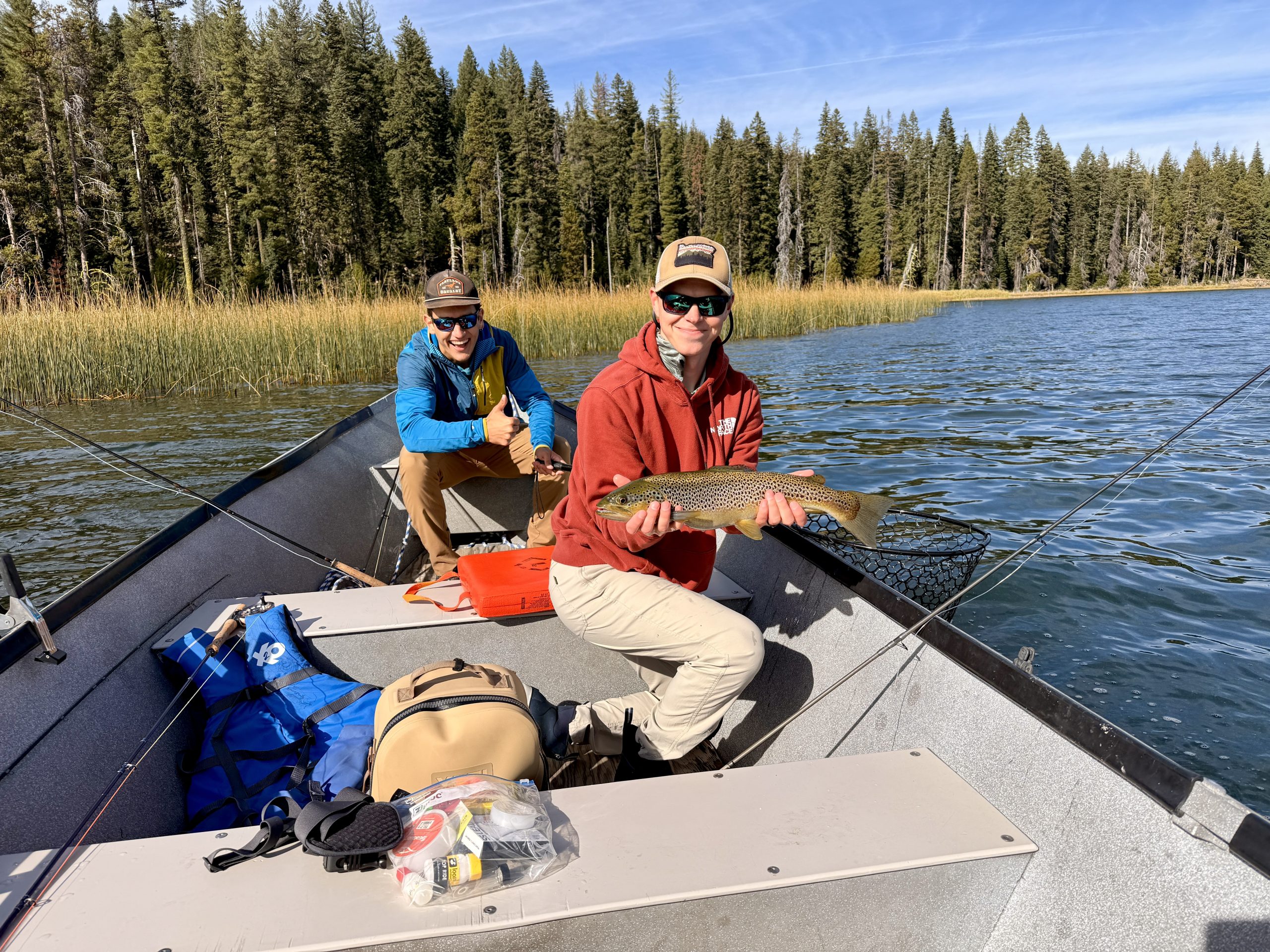
Eventually we all switched to pulling flies because the indicator bite shut off completely. I can only attribute this to the wind picking up. When we started it was nearly glass calm. As the wind created waves the fish felt more comfortable chasing flies. That’s when things started to turn up. Cooper ran the Rio Aqualux with either two or three flies on it spaced 6′-8′ apart and did really well. His top producing fly was a black leech with an orange bead tied incredibly sparse. It was a size 10. Davis ran a faster sinking line with a single fly on it for most of the day. It was a tan slumpbuster and it did really well. Not to remind him but he did loose the biggest fish we hooked all day. That is always the worst part of this lake. With such big fish in the lake it can be a bit more devastating losing a fish than it would be on your local stocked trout pond. I ran a couple lines but I used one for most of the day. I used the Airflo sweep line in a type 3 for most of the day. It casted well and tangled only occasionally. My top producing fly was a simple humongous variation that Devin Olsen ties. It has a squirrel tail and medium polar chenille for the body. I fished the olive and gold version. The thin mint caught some fish, so did a sunburst blob, so did a few other random flies. The strangest one that landed me two really nice browns was a cat’s whiskers pattern. Bright green with a white tail.
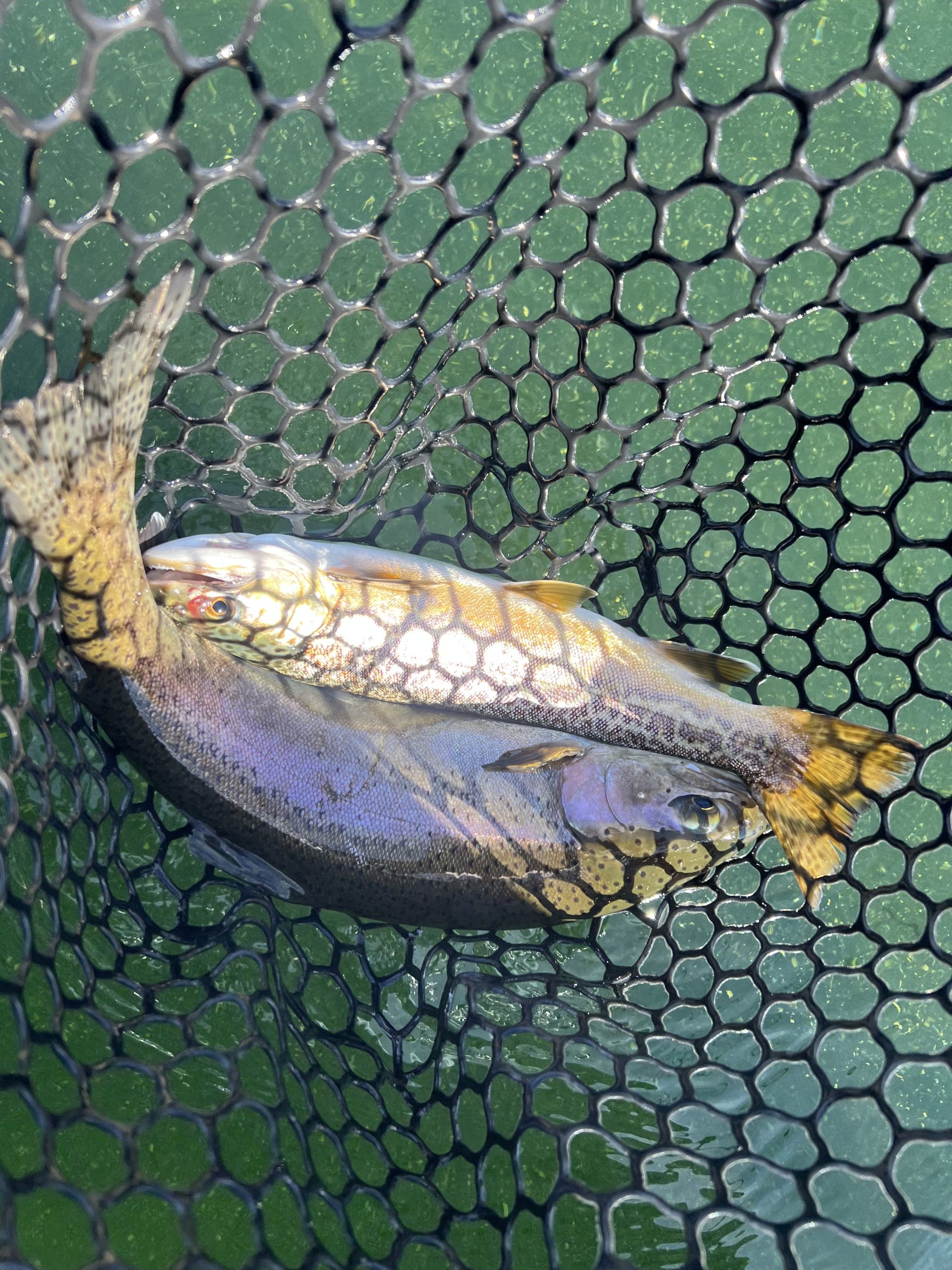
They ate on a 50/50 split between on the strip and on the pause. On this particular day they wanted a consistent strip about 6″ long and hard. It was pretty quick but we never were burning it back. We would pause it at the first hang marker which was about 20′ from the end of the line and about 26′ from the first dropper and if they were going to eat on the pause that’s when they did. We did, like a couple of boobs, miss a bunch of fish on the hang. I think I was only able to land one fish on the hang and miss probably a dozen other ones. I think the hang wasn’t as effective because we were getting eats further out so we were excited to recast. There was also a mild algae bloom on the water. Most of those only affect the top 2′ of the water column, but I’m sure as the flies come up into the algae they can lose track of the flies. I say that but I did have a fish blow up on a thin mint when it was maybe 3″ under the surface and another chase down a booby that was also less that 12″ under the surface.
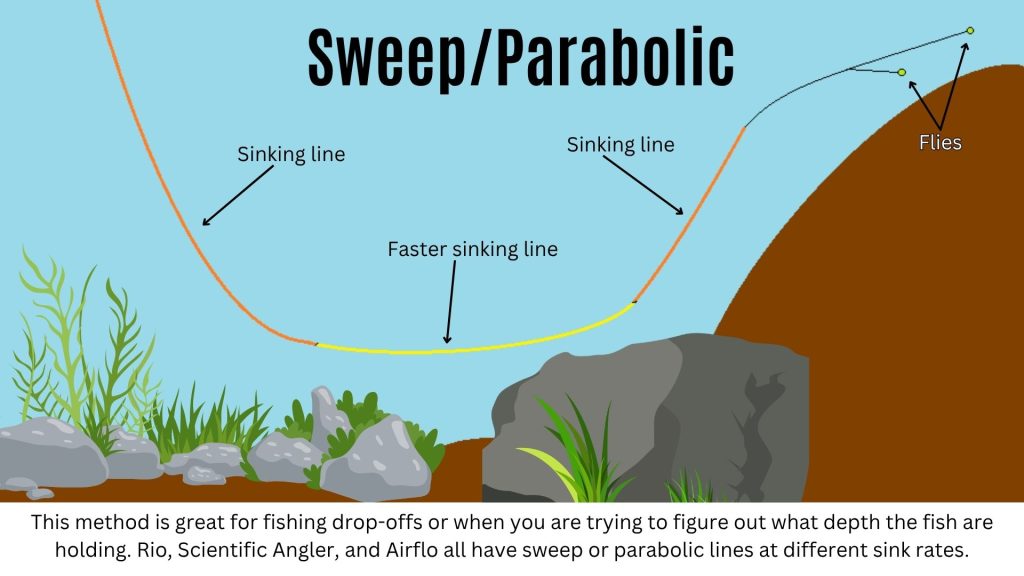
I also fished the the Airflo sweep line in a type 5 once we drifted over deeper water with a shorter weed bed. These lines are really cool. The sink at two different speeds. I’ll use the type 3 as an example. The head of that line sinks at 1.5ips (inches per second) and the belly sinks at 3ips and the running line sinks at 1.5ips. Below is a dramatised version of how it fishes. The line is a great searching line or a great line to fish as you approach a drop off. I competed against someone who won a competition fishing a sweep/parabolic line as they approached a drop off. Pulling flies over and down the face of a weed bed is a pretty incredible way to fish nymphs and damsels. you can exaggerate the variable sink rate with buoyant flies. If you put a FAB or booby on as your point it will accentuate the sinking pattern a ton. The type 5 sinks at 3/5/3 and the type 7 sinks at 5/7/5. That is just Airflo. SA and Rio have their own version of the lines.
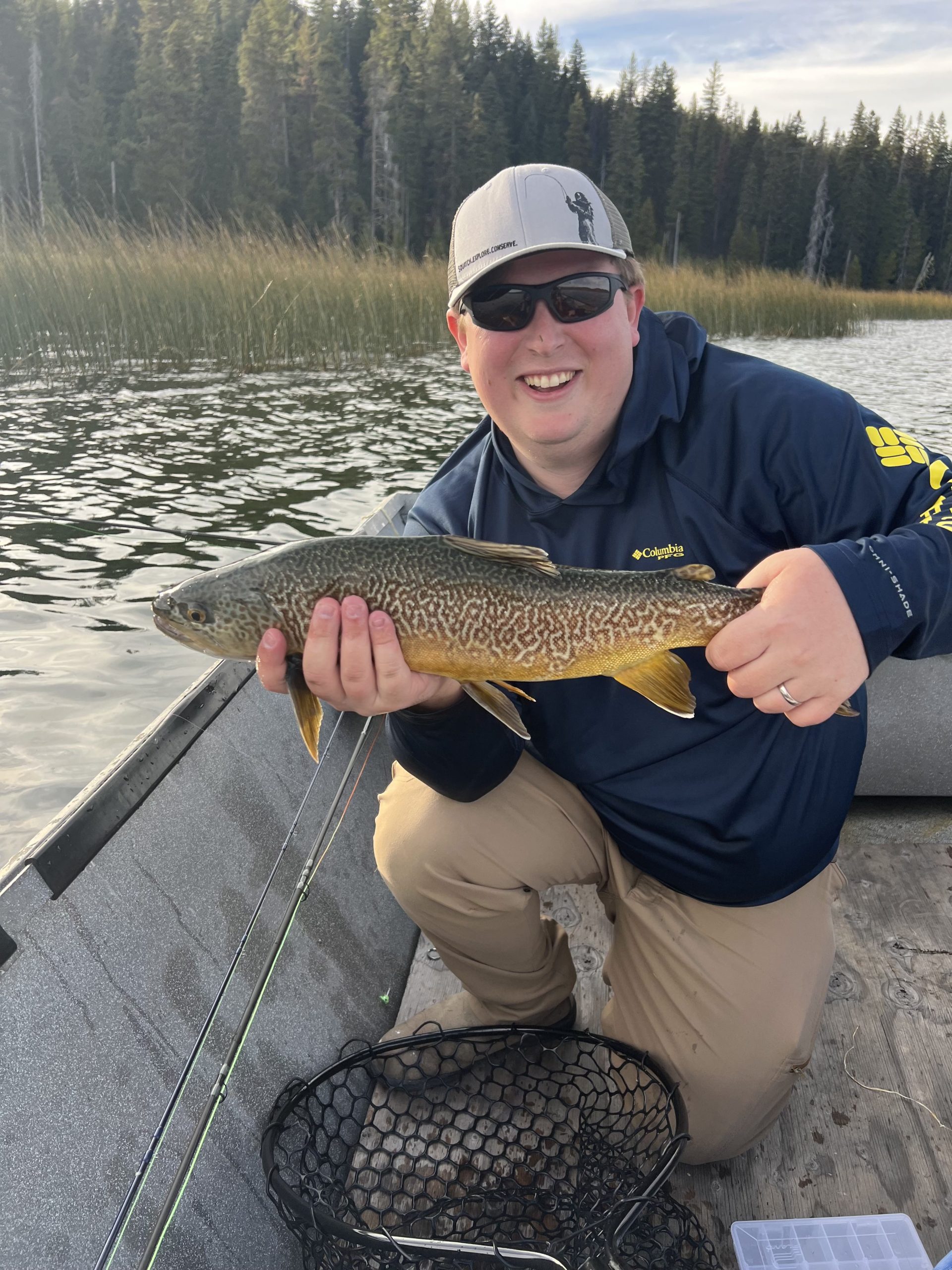
The fishing started really slowly for us but as the day warmed slightly and the wind became more manageable it got a lot more consistent. I think we landed right around 40 fish by the time we had to take the boat back around 6pm. I also think out of those 40 fish landed we only landed maybe 10 rainbows. The browns and tigers were out in full swing. We saw some large fish 24″ plus pushing bait around and busting on them in the shallows, which is quite the sight in freshwater. They are putting on the feed bag for winter and focusing their feeding on the bait that unfortunately has been introduced in the lake. Back in 2024 I spoke with the head biologist, Evan Leonetti, for the region that Diamond Lake resides in. He told me that they had pulled around 200 tui cub and 10,000 golden shiners out of the lake (assuming that was an estimate). The golden shiners are new and were introduced post poisoning in 2006. In the ODWF’s 2025 Diamond Lake Monitoring Report (that came out this year) they reported pulling 12,898 tui chub and 55,508 golden shiners out of the lake through 240 nets placed from May-September. These numbers may seem alarming but from reading the report the ODFW has gotten better at placing traps and nets to avoid trout and focus on the invasive baitfish because the trout they caught in the nets and traps have dropped substantially.
That being said it doesn’t mean the fishing is suffering. In the same year, 2025, they had a reports of over 63,000 rainbows being caught in the lake and over 10,000 tigers and browns combined being caught. The tiger and brown numbers are estimates but they plan to do better interviews, when they do creel reports for rainbows, to get a better idea of catch numbers for those species. They also are maintaining their stocking schedule of ~400,000 fish per year in the lake (remember these are fingerling or sub-legal size trout). The fishing is good and the food is there. This also means that the legendary 30″ trout still is a strong possibility. You really never know what you might hook when you go out to fish Diamond next. It really has been managed well over the last 20 years. I know we all have our gripes with ODFW, but they have done well with this lake and I hope they continue managing it well so we have another 20 years (hopefully more) of excellent fishing.
Like always if you have questions or comments leave them down below or use our contact page or reach out through social media. I’ll list all the gear and flies we used below so if you have a questions about that reach out the same way!
GL
Rods:
Echo Stillwater 10′ 7wt
Echo Stillwater 10′ 6wt
Echo Lago 10′ 6wt
Echo Ion XL 9′ 7wt
Reels:
Lamson Liquid
Orvis Clearwater Cassette (discontinued)
Lines:
Airflo 6th Sense 2 Fast Intermediate
Airflo Superflo Sweep Type 3
Airflo Superflo Sweep Type 5
SA Emerger Tip
SA Stillwater Indicator
Rio Aqualux Intermediate
Flies:
Thin Mint
Cat’s Whiskers
Orange Bead Leech (sparse)
Olive/Gold Humongous
Tan Slumpbuster
Shed Shaker
Sunburst FAB